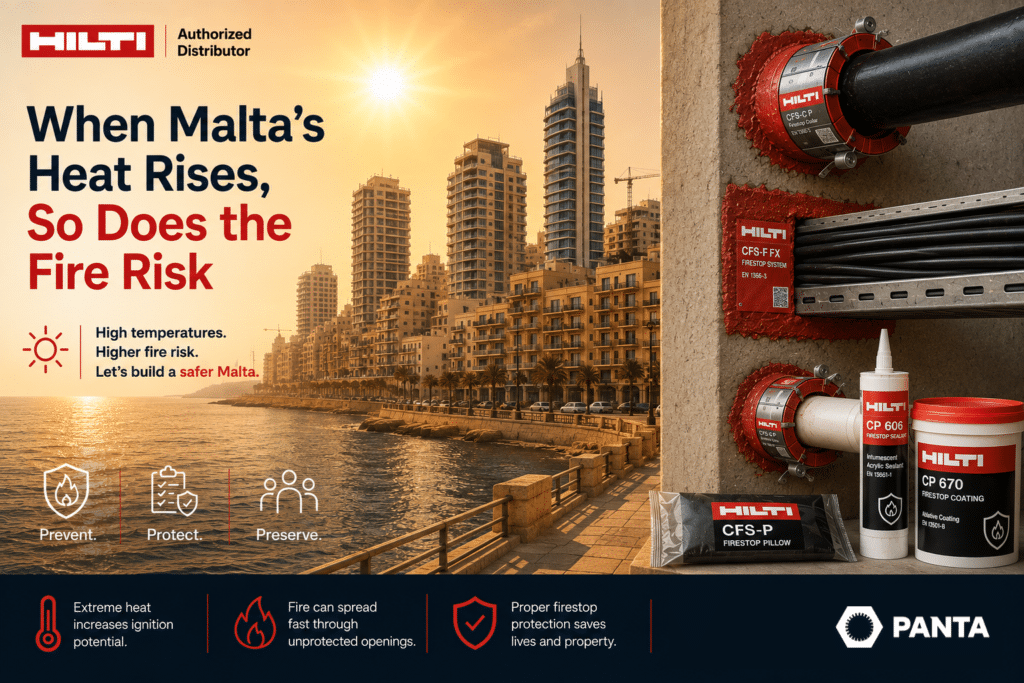
When Malta's Heat Rises, So Does the Fire Risk
Malta has experienced the grips of serious heat waves, and while everyone's talking about the temperatures, almost no one is talking about what that heat does to a building's last line of defence against fire: its firestopping, passive fire protection. Think of firestopping as the mortar between the limestone blocks of a traditional Maltese building-invisible, easy to forget, but the thing holding everything together. Firestop systems work the same way, sealing every gap where cables, pipes, and ducts pass through walls, floors, and shafts, so fire, smoke, and toxic gases can't spread between compartments. And like old mortar drying out under the sun, firestopping that isn't properly installed or maintained will quietly weaken until the day it's needed most. These systems were designed for normal conditions. A prolonged heat wave isn't normal-it pushes materials, seals, and services past what they handle on an average day, which is exactly when weak or poorly installed firestopping starts to fail. More heat means more thermal stress on the very penetrations firestop is meant to protect: cables soften, plastics deform, joints shift, sealants age faster, and cooling systems run harder. Each of those changes can open a gap in a fire barrier that would otherwise have stayed hidden for years.Where the stress shows up:
- Cable insulation softens where it passes through fire-rated walls and floors, loosening the seal around the penetration.
- Expansion and construction joints shift as materials expand and contract more than usual, straining fire-rated joint seals never designed for the extra movement.
- Plastic pipes and conduit (HDPE, PVC) soften and deform, especially in roof spaces, changing the opening geometry a firestop system was originally sized for.
- Sealants and intumescent materials age faster under sustained sun and heat, particularly at roof-level penetrations and external wall junctions.
- HVAC systems, running harder and longer, put mechanical penetrations and duct collars through extra thermal cycling that can loosen wraps and collars over time.
- EV parking levels face a compounding risk: heat adds thermal stress to EV batteries, an already recognized fire hazard. If a fire starts and firestopping around cable trays and service penetrations isn't sealed properly, smoke and toxic gases can travel upward into stairwells and upper floors-turning a parking-level incident into a building-wide emergency.
This is why planning ahead matters.
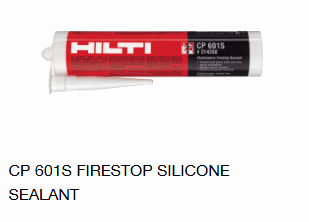
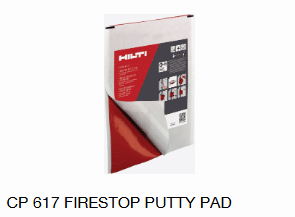
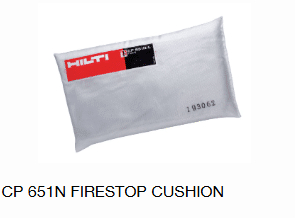
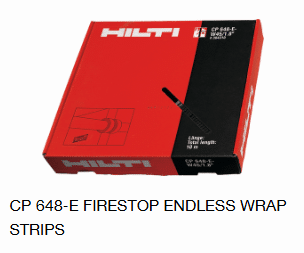
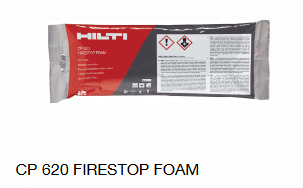
Panta is the exclusive Hilti distributor in Malta, giving you access to firestop systems built on more than three decades of research and testing. Hilti's range spans boards, coatings, collars, wraps, sealants, and mortars for cable, pipe, and mixed penetrations-creating water-, smoke-, and gas-tight barriers-backed by design software and jobsite documentation tools. For high-rise, supermarket, and data centre projects in Malta, Panta supports you ahead of time with on-site firestop inspections, system design support, full documentation, and certified Hilti solutions. If your project needs a partner who understands both the engineering and the field realities of firestopping in Malta's climate, let's talk before the gaps become a problem. Contact Panta today on (+356) 79609820 to schedule a site visit or design consultation.Some products: